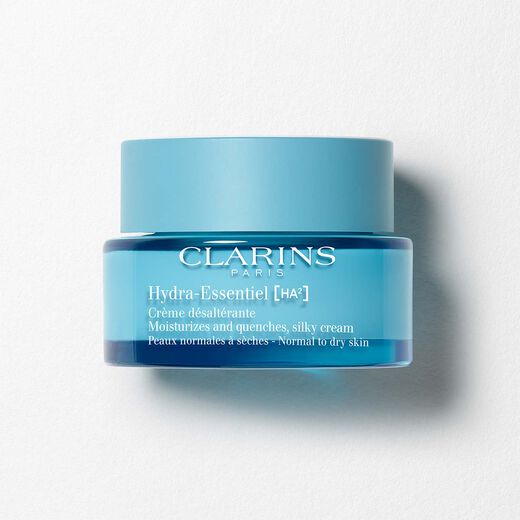
Best Dry Skincare Routine
.jpg "Dry Skin Routine")
Dry skin can be difficult to manage at times, but finding the right skincare steps, in the right order, can help boost your skin’s natural moisture and leave you feeling refreshed and radiant. A smart skincare routine for dry skin starts with gentle basics and proper layering, so your skin looks smooth and more supple.
Think of this as your go-to dry skincare routine: cleanse, prep, target, then seal everything in (plus SPF during the day). If you’re building from scratch or tweaking one of the
Key Takeaways
- Product order matters for dry skin: Like with most skincare routines, you’ll want to begin with a cleanser and then progress to thicker textures as you move through your routine. And as always, in the daytime, end with sunscreen.
- Keep cleansing comfortable: Washing too often or using harsh products can leave skin feeling tight and uncomfortable. A gentle morning cleanse and a thorough nighttime cleanse are usually enough.
- Hydration needs layering: Use a hydrating serum, then follow with a moisturizer that helps support the skin’s moisture barrier so skin looks smoother and feels more cushioned.
- Sunscreen is part of a dry skincare routine: Daily sunscreen helps protect against exposure that can leave skin looking drier and less even over time, and it helps maintain the results of the rest of your routine.
- Exfoliate carefully and consistently: Exfoliate one to two times per week to help reduce flaky buildup, so products apply more evenly. Follow immediately with hydrating steps, and add a face oil at night when skin feels extra tight for added comfort.
What Causes Dry Skin?
Before we get into how to care for dry skin, it’s important to understand what causes dry skin on the face and other areas of your body.
Dry skin often occurs when your skin lacks the oils and moisture that help it look smooth and soft. Some signs that your skin is dry include a tight, dull surface or a loss of its natural bounce. If you’re dealing with dry skin, pay close attention to these factors:
- Environment: Dry skin is often caused by environmental factors such as cold weather or direct sun exposure. Indoor heat and hot showers can also leave skin feeling parched. Low humidity and temperature swings (moving between chilly outdoors and indoor heat) can increase surface water loss, which is why skin can feel tight and look flaky so quickly in harsh conditions.
- Lifestyle: Certain factors like smoking or drinking alcohol, or poor nutritional habits, can contribute to the overall health and appearance of your skin. Stress and not drinking enough water can also play a role. Avoiding self-care and letting your lifestyle slip in these ways can leave your skin looking dull and feeling less comfortable, as they disrupt its ability to retain moisture throughout the day.
- Skin care routine: Use of harsh products or excessive cleansing in your skincare regimen can strip the skin of its necessary oils and leave it feeling dry and uncomfortable. If you also notice rough, flaky areas, our guide to
dry skin patches can help you understand what’s going on and how to support your skin day to day.
The good news is that a consistent skincare routine for dry skin can help restore that cushiony, fresh feel by providing your face with the hydration and protection it needs.
Quick note: “dry” and “dehydrated” can look similar, but they’re not identical. Dry skin is usually low in surface oils, while dehydrated skin is low in water and can feel tight even if you still get some shine. That’s why a dry skincare routine works best when it layers hydration first, then adds comfort to help keep it from evaporating.
Skincare Routine for Dry Skin
A good skincare routine for dry skin works best when each step is in the proper order, layering product textures and benefits on top of one another. When it comes to your routine, think “comfort, then hydration, then lock it in.” We’re going to dive into a skincare routine for dry skin below, along with some product recommendations, but if you want help choosing the best matches for your skin, the
Daytime Routine
1. Cleanse
Dry skin needs a cleanse that lifts impurities without leaving skin feeling tight. A gentle cleanser removes overnight oil and sweat so the rest of your routine goes on evenly and feels more comfortable. Starting with a soft cleanse also helps prevent that dry, stretchy feeling that can creep in later in the day.
Product Picks: Try our
2. Tone
For dry skin, toner is about setting the stage for the layers that follow. It lightly rehydrates right after cleansing, so skin feels more flexible, and your targeted treatments or serum spreads evenly instead of catching on dry areas. That extra lubrication can also help you use less product overall because everything applies more smoothly and consistently. The result is a routine that feels comfortable from start to finish.
Product Picks:
3. Target concerns
Dryness doesn’t always show up the same way every day. Sometimes dry skin can mean tightness, and other times dullness. And other times, it can look like your makeup just isn't sitting right. This step is where you tailor your routine to whatever you want to see more of (glow, smoothness, comfort) without overwhelming your skin. For example, if your skin looks dull and feels tight, you might reach for a radiance-boosting treatment to start your day. Keeping this step lightweight and purposeful helps you layer effectively without feeling heavy.
4. Eye cream
The eye area is often the first place dryness shows up. Fine lines can look more noticeable and concealer may cling, causing a cakey look to your makeup. An eye product adds targeted hydration, helping the area look smoother and more refreshed. Gentle application (pressing, not rubbing) is the real difference here as the eye area is very delicate.
Product Picks:
5. Serum
Serums are critical when dry skin starts to look flat because they’re the concentrated layer that helps skin look plumper and more hydrated. They support radiance and improve your moisturizer’s benefits by locking in hydration. For an extra comfort boost, you can apply your serum while your skin still feels slightly damp.
Product Picks:
6. Moisturizer
Moisturizer is your seal-and-soften step. It helps retain hydration and creates a comfortable finish that makes skin look healthier and promotes elasticity. For dry skin, it also helps makeup sit more evenly and keeps skin feeling good throughout the day.
Product Picks:
7. UV Protection
SPF is a daily necessity. Even if it’s cloudy or you’re just sitting by a window, your skin is still not safe from UV rays. Prolonged sun exposure can leave skin looking drier and less even, so protection helps keep your skin healthy.
Product Picks: For dry skin, the best SPF is one that feels weightless and layers without pilling.
.jpg "Dry Daytime Skincare Routine")
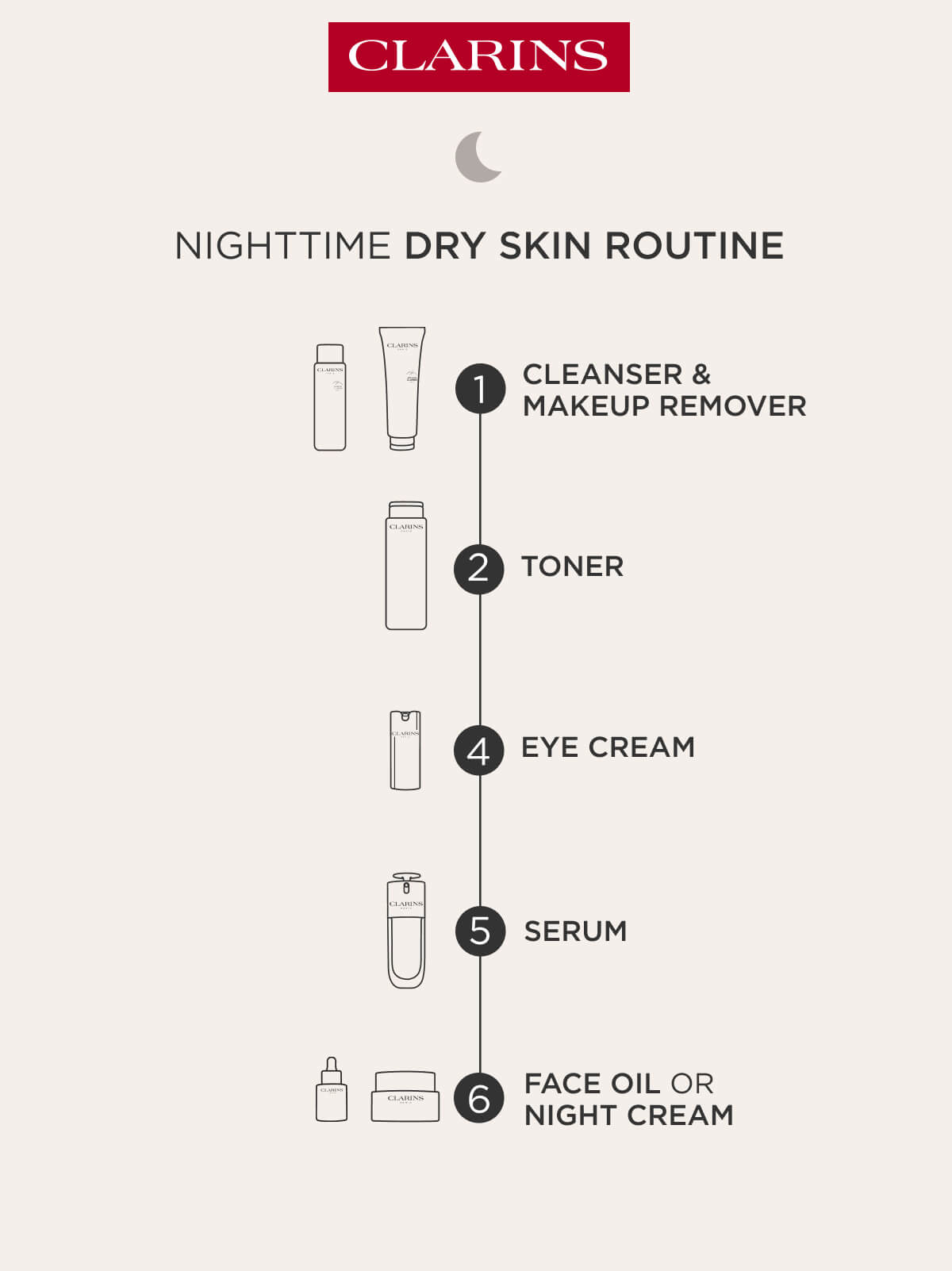
Nighttime Routine
1. Cleanse and remove makeup
Night removes the day’s buildup so your skin doesn’t feel uncomfortable in the morning. If anything lingers on the surface, the products in the following steps of your nighttime care can feel like they’re slipping around instead of settling in. Be sure to stick to lukewarm water. Hot water can leave dry skin feeling even tighter.
Product Picks: Clarins’
2. Tone
For your evening winddown, toner is a step to remove any remaining makeup or remnants of your day and set the stage for your skin’s serum and moisturizer steps.
3. Eye cream
Nighttime eye care helps soften any dryness so the area looks smoother and more energized when you wake up. It also supports comfort, which can be a big deal if your eyes feel dry or makeup tends to cling during the day. Press in gently to avoid any discomfort in your eye area.
Product Picks:
4. Serum
Night is the best time to focus on replenishing, since your skin isn’t battling UV exposure and other elements. A hydrating serum supports a more rested look by morning and boosts the comfort of your following layers.
Product Picks: Keep it simple. One great serum can do a lot for dry skin.
5. Face oil or night cream
This is your final step that helps reduce dryness overnight and seals in a more cushioned look by morning. Oils are great when skin feels rough or tight, and night creams give that comfortably rich finish. If you use both, apply the lighter texture first and finish with the richer layer.
Product Picks:
If you prefer a more luxurious, silky finish,
Additional Steps
Consistent exfoliation can be a game-changer for dry skin. Flaky skin buildup can make products cling to the surface and cause makeup to look patchy, so exfoliating helps reveal a smoother-looking finish and can make your routine feel more effective.
Aim for exfoliation 1–2 times per week: chemical exfoliators help loosen buildup without scrubbing, while physical exfoliators polish the surface. Just remember to use a light hand and don’t overdo it. A treatment oil is also a smart add-on when skin feels extra tight, helping comfort rough patches and boost glow.
Product Picks:
Frequently Asked Questions About Dry Skin
Which ingredients should I look for in products for dry skin?
Look for ingredients that help skin hold onto moisture and feel more comfortable. Humectants like hyaluronic acid and glycerin boost moisture retention, which helps skin look plumper and smoother.
Should I exfoliate if I have dry skin?
Yes, gentle exfoliation can be helpful for dry skin, as long as you don’t overdo it. Dry, flaky buildup can affect the look and feel of skincare products and makeup. Exfoliating helps reveal a smoother-looking finish. Aim for exfoliation 1–2 times per week, and choose your method based on how your skin feels. Chemical exfoliators (like lactic acid or PHA) help loosen buildup without scrubbing, while physical exfoliators polish the surface (use a soft touch). Follow with hydrating steps right away—serum, eye cream, moisturizer, and if needed, a face oil—so skin feels comfortable afterward.
How many times a day should I wash my face if I have dry skin?
For most people with dry skin, washing your face twice a day—morning and night—is plenty. Over-cleansing can leave skin feeling tight and uncomfortable by stripping away the oils that help keep it soft and supple. In the morning, a gentle cleanse removes overnight oil and sweat, enabling skincare products to layer smoothly. At night, cleansing is key for removing makeup and daily buildup. If your skin feels very dry in the morning, you might prefer a quick rinse with lukewarm water or a very gentle cleanser, then move straight into hydrating steps.
What causes dry skin on the face?
Dry facial skin often comes down to a mix of environment, lifestyle, and skincare choices. Harsh weather and sun exposure can make skin feel tight and look dull. Hot showers or indoor heat, and frequent hand-to-face contact, can also contribute to that uncomfortable, parched feeling. Lifestyle factors like smoking or drinking alcohol, and not getting enough water, may impact how your skin looks day to day. Using harsh cleansers or skipping moisturizer can make things worse. A dry skincare routine helps by layering hydration and sealing it in with a comfortable moisturizer (and SPF in the daytime).
How can I hydrate my skin naturally at home?
Small changes at home can make a big difference in how dry skin looks and feels. Start with the basics: drink water regularly, limit very hot showers, and use a humidifier if indoor air is dry. After cleansing, apply skincare to slightly damp skin to maximize your skin’s softness and elasticity. Use a hydrating serum, then a richer moisturizer to help reduce the tight, dry feeling. If your skin still feels parched, add a face oil as your final step at night to help lock in comfort. And don’t forget daily SPF! Sun exposure can leave skin looking drier and more uneven over time.
You might like
Best seller
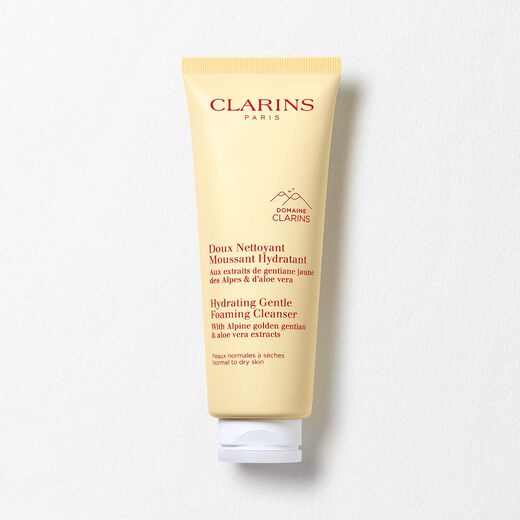
Moisture-rich, gentle foaming cleanser for normal to dry skin types removes makeup, impurities + boosts hydration for a soft and supple complexion.
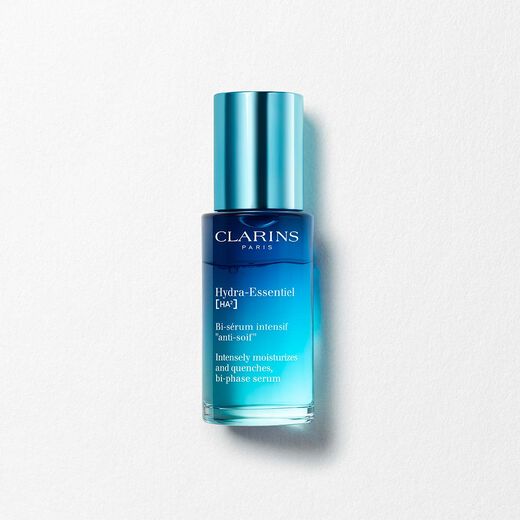
Super-quenching bi-phase face serum for all skin types powered by our exclusive Hyaluronic Power Complex+ to intensely hydrate, smooth + plump skin in :60 seconds.¹